Texas now has more than 456,000 electric vehicles registered on its roads, a number that more than tripled between 2022 and the end of 2025, according to the Texas Department of Transportation. Every week, roughly 1,500 new EVs join that count. Dallas-Fort Worth alone accounts for nearly 37% of all EV registrations statewide, with Houston and Austin close behind.
That growth is exciting. But it comes with a problem most new EV owners don’t see coming: their vehicles are being cleaned the wrong way, and Texas heat is making the damage worse.
EVs Are Built Differently And Standard Detailing Doesn’t Account for That
Most car owners treat a Tesla Model Y or Rivian R1T the same way they’d treat a gas-powered Honda or Ford. They grab the same interior cleaner they’ve used for years, wipe everything down, and call it done.
The problem is that EV interiors are fundamentally different from what came before them.
Modern electric vehicles, from Tesla to Polestar to the Chevy Equinox EV are built with vegan leather seating surfaces instead of traditional leather, large touchscreen displays that serve as the primary control interface, minimalist dashboards made of soft matte-finish plastics, and embedded sensors and cameras that support driver assistance systems.
Each of these materials reacts badly to the wrong products.
Traditional leather conditioners, which millions of car owners use without a second thought, are formulated to penetrate animal-hide leather. When applied to vegan leather, which is a polyurethane-based synthetic material, those same conditioners can dehydrate the surface, accelerate cracking, and cause premature peeling. Alcohol-based or ammonia-based cleaners, common in multi-surface sprays, will strip the oleophobic coating off large infotainment screens, leaving them permanently smeared and harder to read. High-pressure water or spray applied near charging ports and sensor housings creates moisture ingress risks that standard gas vehicles simply don’t have.
“Most EV owners are environmentally conscious people who care about their vehicles,” says Parham Koukia, lead car detailer and operations manager at Panda Hub. “But when it comes to interior care, they’re often unknowingly using products designed for a completely different type of vehicle. The damage is slow and invisible at first, and by the time it shows up, it’s expensive to fix.”
For Texas EV owners looking for professional care from detailers who understand EV-specific materials, car detailing services across Texas are now available that account for the unique requirements of synthetic interiors, touchscreen systems, and heat-stressed surfaces. The demand has grown alongside EV adoption, and providers who work specifically with EV materials are increasingly accessible statewide.
Texas Heat Turns a Maintenance Problem Into a Structural One
Interior damage from improper detailing is bad enough in mild climates. In Texas, the consequences are compounded by one of the most punishing automotive environments in North America.
Between June and September, interior cabin temperatures in parked Texas vehicles routinely reach 140 to 180 degrees Fahrenheit. That’s not an exaggeration, it’s a product of the greenhouse effect created by glass windows combined with ambient air temperatures that regularly exceed 100 degrees. During peak summer, Central Texas has recorded stretches of 45 or more consecutive days above 100°F.
For traditional vehicles, this level of heat is already hard on interiors. UV radiation from the sun breaks down vinyl, plastic, and unprotected leather over time, leading to fading, cracking, and brittleness. An unprotected dashboard on a vehicle parked outdoors in Texas for more than five years will typically show visible cracking and color loss.
For EVs, the stakes are higher. Many of the materials used in EV interiors, particularly the vegan leather seat surfaces and the soft matte plastics found on Tesla, Rivian, and Hyundai Ioniq models, are more sensitive to heat and UV exposure than the materials found in traditional vehicles. Without the right protective conditioning, the combination of Texas summer temperatures and improper cleaning products creates a compounding cycle of damage.
There’s also the battery to consider. When a Texas EV sits in direct sun with a hot, uncooled cabin, the vehicle’s thermal management system works harder to prevent battery overheating. According to data from Recurrent, an EV analytics company, the air conditioning system in a modern electric vehicle can draw between 3 and 5 kilowatts of power during the initial cooldown phase. A cooler, well-maintained interior, one that’s been properly detailed and protected against heat buildup, places less strain on the battery during those first minutes after the owner gets in.
This is precisely why interior car detailing using EV-appropriate products and techniques has become one of the most practical investments a Texas EV owner can make.
What EV-Specific Interior Detailing Actually Looks Like
The detailing approach that works for a gas-powered truck needs to be rethought entirely when applied to an electric vehicle cabin. Here’s what that looks like in practice.
Vegan leather seats
Requires pH-neutral cleaning solutions specifically formulated for synthetic upholstery. Products designed for traditional leather are often too alkaline and too penetrating for the lower-porosity surface of vegan leather. After cleaning, a lightweight water-based conditioner with UV-protective properties should be applied to keep the surface supple and slow the drying effect of repeated Texas sun exposure.
Touchscreens and digital instrument clusters
It should only be cleaned with electronics-safe glass cleaners applied to a microfiber cloth first, never sprayed directly on the screen. Ammonia and alcohol, both common in standard glass cleaners, will degrade the oleophobic coating that makes the screen responsive and fingerprint-resistant over time.
Matte and soft-touch trim panels
There are common in Tesla, Polestar, and BMW i-series interiors and cannot be treated with any oily or silicone-based dressing. Those products leave visible residue on matte surfaces that attracts dust and is difficult to remove. Silicone-free plastic restorer sprays are the appropriate product for these surfaces.
Charging ports and sensor areas
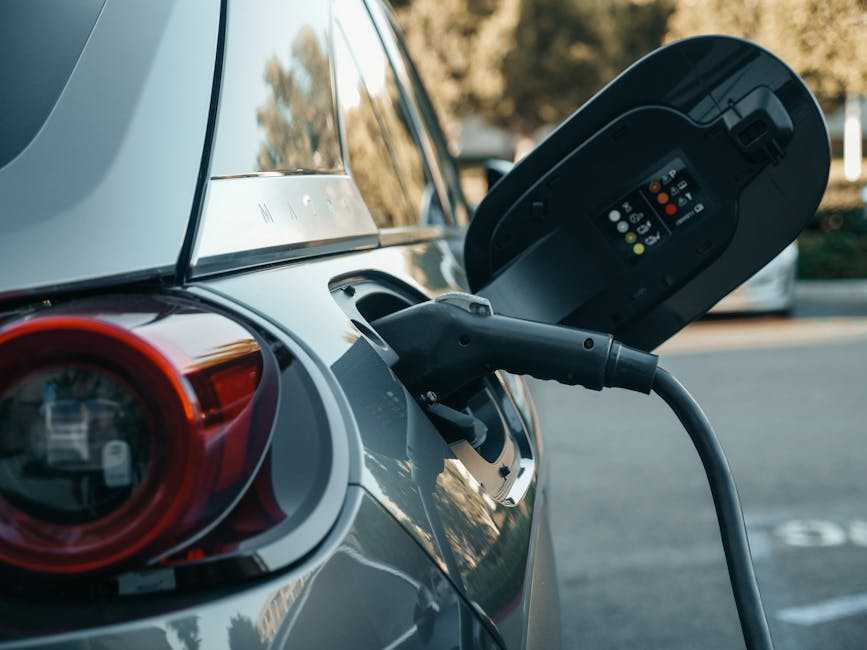
It requires a dry-first approach: loose dust and debris are removed with a soft detailing brush or low-pressure compressed air, and any wiping is done with a lightly dampened microfiber cloth only. High-pressure water near these areas creates moisture risks that can lead to corrosion or sensor malfunctions over time.
Cabin air filters
The air filters in EVs should be inspected and replaced more frequently in Texas than manufacturer guidelines suggest for temperate climates. Texas dust, pollen, and airborne particulates are significant, and a clogged cabin filter in a sealed, well-insulated EV interior will degrade air quality faster than in a vehicle with less effective cabin sealing.
The Resale Angle
One of the clearest financial arguments for proper EV interior care in Texas is resale value.
The EV market in Texas is growing rapidly, which means a large secondary market is developing for used EVs. Buyers in that market are increasingly familiar with what a well-maintained EV interior looks like, and increasingly unwilling to pay full price for one that shows signs of heat damage, screen degradation, or seat cracking.
The cost differential is significant. A new dashboard replacement on many EV models runs over $1,000. Full seat surface restoration can cost $2,000 or more. Touchscreen reconditioning or replacement, depending on the model, can easily reach $1,500 to $3,000. Preventive interior detailing with EV-appropriate products costs a fraction of any of those figures.
Practical Maintenance Schedule for Texas EV Owners
Given the combination of EV material sensitivity and Texas climate, the following maintenance cadence makes sense for most owners in the Dallas-Fort Worth, Houston, and Austin metro areas.
Every two to four weeks during summer: wipe down vegan leather seat surfaces with a pH-neutral cleaner and microfiber cloth. Dust accumulation in Texas is high, and loose particulates act as fine abrasives on synthetic surfaces every time someone gets in or out of the vehicle.
Every one to two months: clean touchscreens with screen-safe microfiber technique, wipe down matte trim with silicone-free product, and inspect the charging port area for dust or debris buildup.
Every three to four months: apply a UV-protective conditioner to all vegan leather surfaces, treat matte plastic panels with an appropriate restorer, and perform a deeper interior extraction on carpets and upholstered areas.
Annually: replace the cabin air filter, particularly before peak pollen and dust season, and perform a comprehensive interior assessment for any early signs of UV-related degradation.
The Bottom Line
Texas is one of the fastest-growing EV markets in the country, and the state’s climate makes proper vehicle maintenance more important, not less. Electric vehicles represent a real shift in automotive materials and engineering, and they need a detailing approach that reflects that.
Owners who continue treating their EV interiors the same way they treated their last gas-powered vehicle will see the consequences in cracked vegan leather, degraded touchscreens, and a lower resale price when they eventually sell. Those who adapt their maintenance routine to match what their vehicle actually requires will protect both the interior and the investment.The EV transition in Texas is accelerating. The detailing conversation needs to catch up.